5 Ways a DJ's Mix Tells You More Than a Glowing Testimonial Ever Could
Five-star reviews all sound the same. A mix lets you hear how a DJ actually works, from energy and genre to how they read a room.
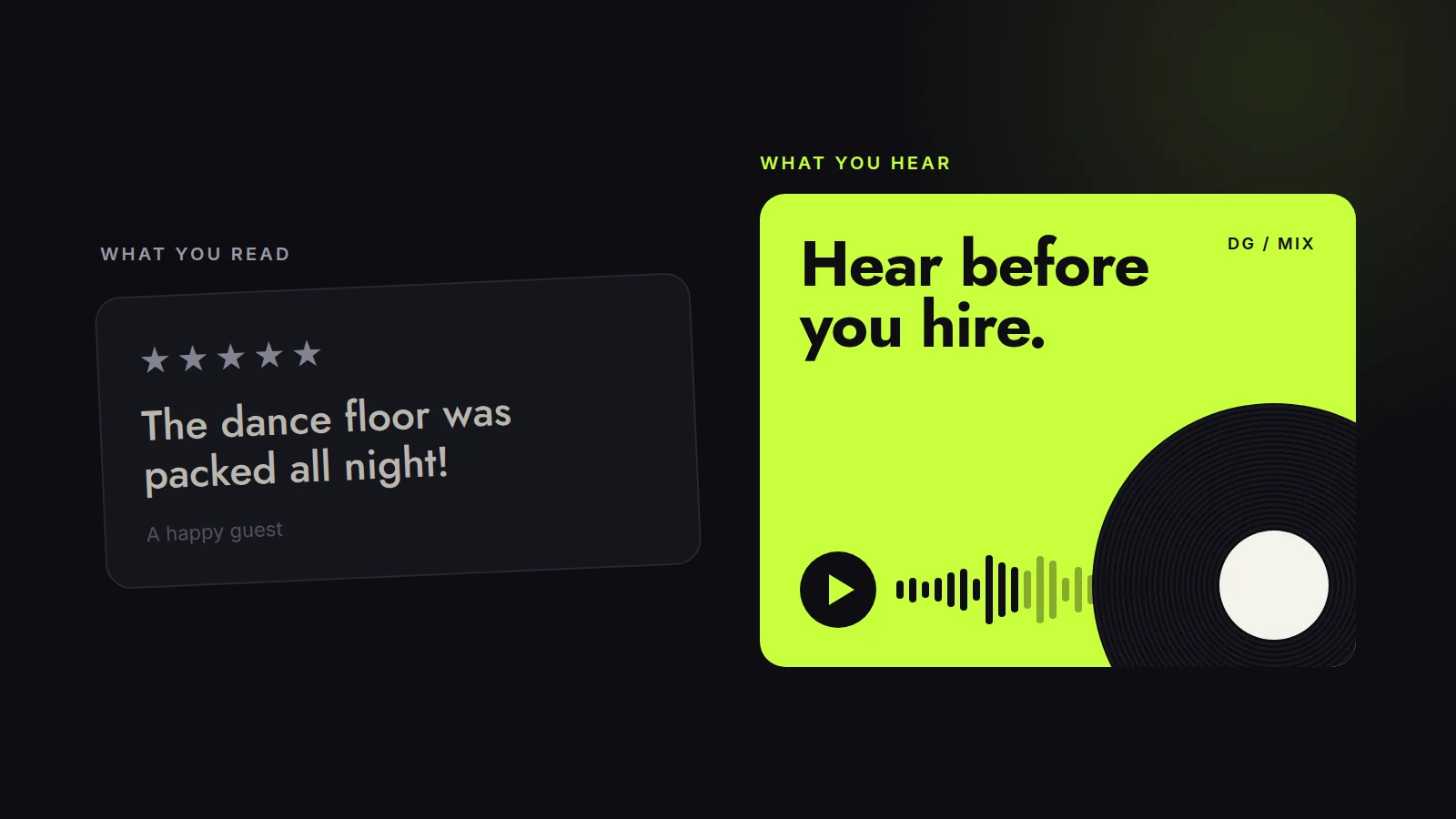
Imagine you're booking a DJ for a wedding. You've narrowed it down to two names. Both have five stars, and both have a review that says the guests loved it and the dance floor was packed all night.
So which one do you pick?
Honestly, you can't tell from that. Testimonials are nice to read, but they're written after the fact by someone who had a good time. They're also chosen by the DJ. Nobody puts the lukewarm ones on their website. That doesn't make them dishonest. It just means they can't tell you much about whether a DJ suits your night.
A DJ mix is different. You press play and you hear how they actually work. Here's why that tells you more than any review will.
1. You can hear energy, not just read about it
"Kept the energy high all night" turns up in a lot of DJ reviews. It's a lovely thing to hear, but what does it actually mean?
For one crowd, high energy means wall-to-wall party anthems. For another, it means a slow build that doesn't peak until midnight. The review uses the same words for both.
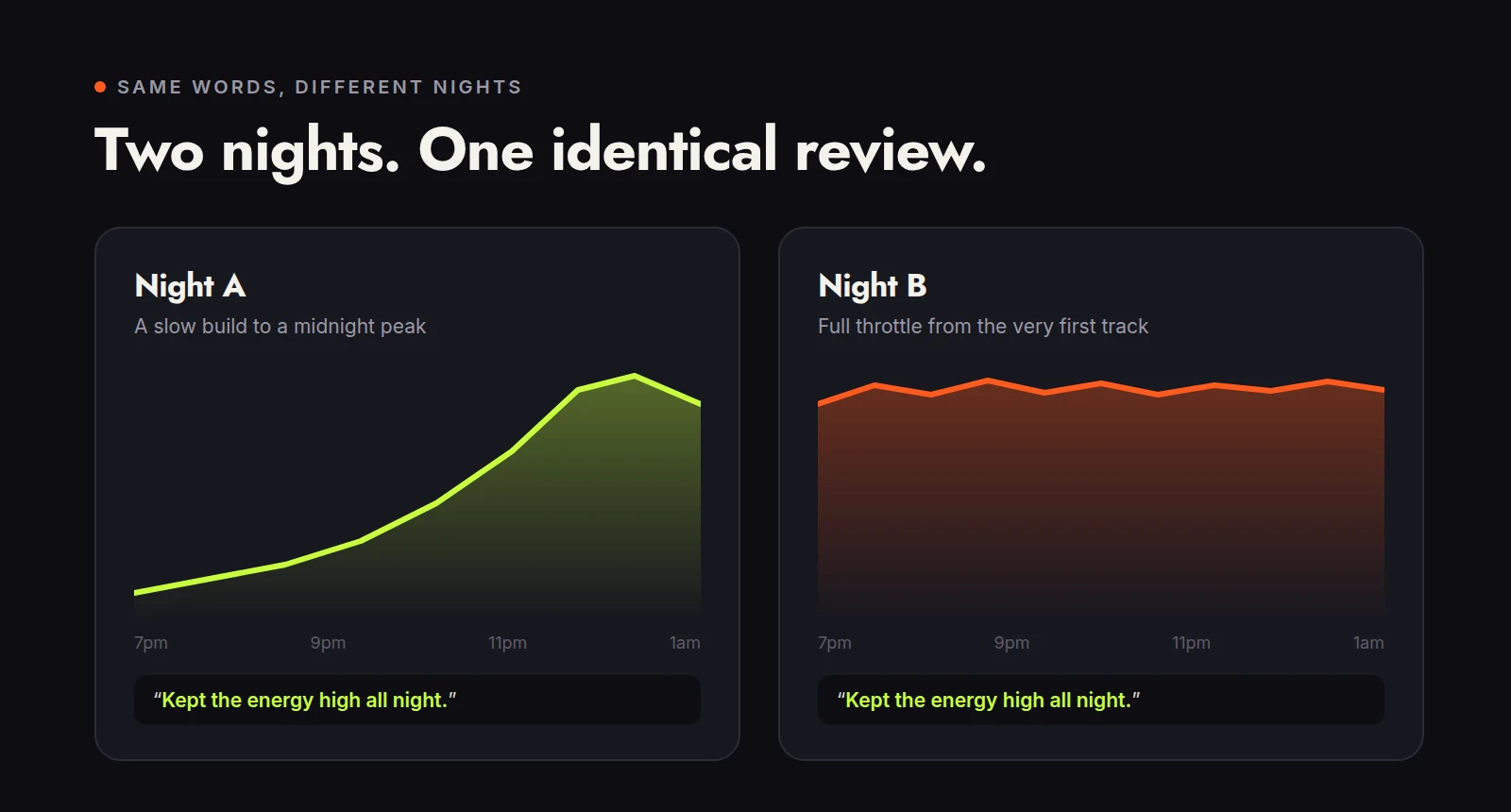
A mix lets you hear it for yourself. You can hear how they move between tracks, whether the changes are smooth or a bit clunky, and whether the set has some shape to it or just keeps going at one level. Ten minutes of listening tells you more about a DJ's energy than a page of compliments.
2. Genres sound different from how they read
DJ profiles often list genres such as house, disco and funk. That's a useful start, but each of those covers a lot of ground.
House could mean deep, moody and built for 2am. It could also mean bright, vocal and easy for your aunt to dance to. Disco might be classic floor fillers or obscure edits that only a few people in the room will know. A testimonial almost never clears that up, because the person writing it wasn't thinking about subgenres. They were having a nice evening.
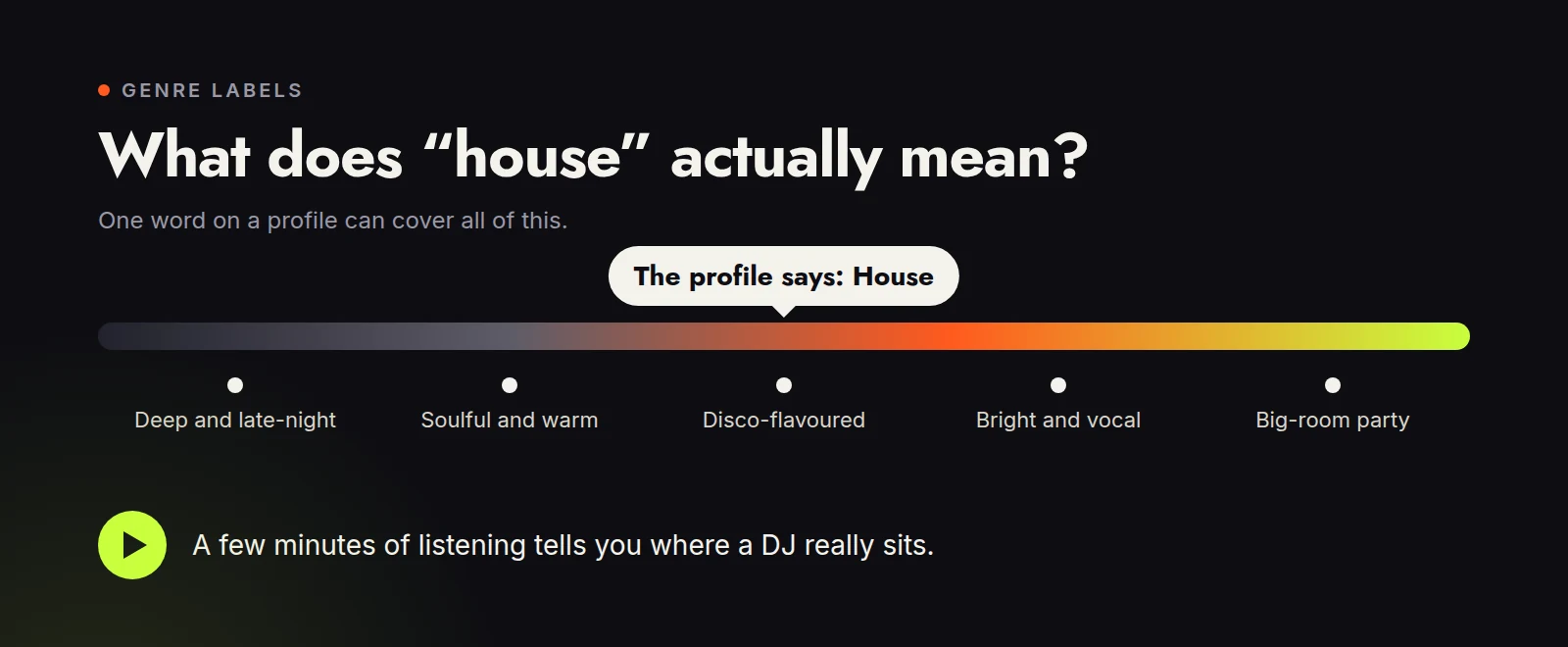
When you listen, you find out in a few minutes whether their version of house is your version of house. That's hard to get from a description.
3. Reading the room shows up in the music
One of the most important things a good DJ does is pay attention. They notice when the floor is filling up and when it's starting to drift. They know when to push, when to ease off and when to throw in something unexpected to win people back.
Reviews rarely capture this. A guest might say "they just knew what to play", but they won't be able to explain how. It happens quietly, which is partly why it works.
In a recorded set, especially a live one, you can hear those decisions. You hear where the DJ lets things breathe, where they build and how they recover after a quieter moment. You're listening to their judgement as it happens.
4. A review is one night. A mix shows how they work
A testimonial captures one event through one person's memory. Maybe the venue was great, the weather was perfect and the free bar was very generous. All of that affects how someone remembers the music.
A mix tells you more about the DJ's habits. It's a better guide to what they usually bring to a booking, particularly if it's labelled for an occasion. A wedding set, a warm-up set and a peak-time club set should all sound quite different, which is a big part of why a great club DJ isn't automatically a great wedding DJ. If a DJ has mixes for the kind of event you're planning, you can hear how they normally approach it rather than relying on how one guest felt on one night.
5. Listening first makes the conversation easier
The usual way to book a DJ can be slow. You send an enquiry, wait for a reply, ask what they charge, ask what they play, maybe ask for a sample and wait again. Halfway through, you may realise they were never a good fit.
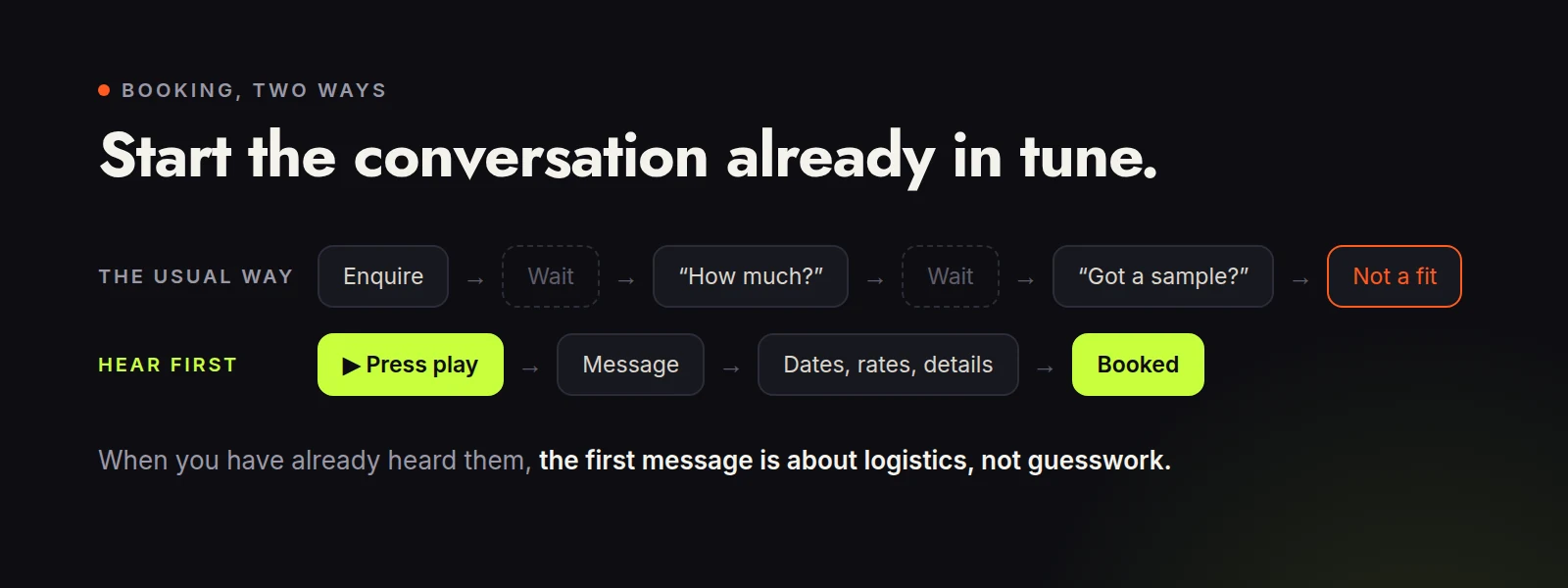
When you've already heard the DJ, your first message is more useful. You already know you like how they sound, so you can get straight to the practical bits: the date, the timings, the rate (here's what DJs typically cost in the UK), the equipment and any must-play or do-not-play tracks.
It saves time for both of you, and you go into the booking knowing a lot more.
So, are testimonials useless?
No. A good review can still tell you useful things about a DJ, like whether they turned up on time, were easy to deal with and handled requests well. Those things matter, especially at work events, where playing it safe can be a risk of its own.
But they can't tell you how the DJ sounds. For that, you need to listen.
Hear before you hire
That's the idea behind DeckGigs. DJ profiles put real mixes first, played straight from Mixcloud or SoundCloud, with clear starting rates, genres, locations and availability alongside them. You can listen, compare and shortlist before you send a single message.
If you're looking for a DJ, have a browse at deckgigs.com. Press play on a few profiles and see who sounds right for your event.
Quick answers
Are DJ testimonials reliable?
They are useful for things like punctuality, professionalism and how a DJ handles requests. But they are chosen by the DJ and rarely describe how the DJ actually sounds, so use them alongside a mix rather than instead of one.
What should I listen for in a DJ's mix?
Listen for smooth transitions, a set that has some shape rather than staying at one level, genres that suit your crowd, and ideally a mix labelled for the type of event you are planning.
How long should I listen to a DJ mix before booking?
Around ten minutes is usually enough to get a feel for a DJ's style. Skip to a few different points in the mix to hear how they build and change pace.